Cropping workloads and deciding what’s important

The FOSS community is amazing, and as often we may hear it has problems there’s one serious issue I’m sure we all agree with; we will always have a need for more contributors. Every project is starving for people – I couldn’t name a single project which isn’t on some level.

What we lack in fleshy human caffeine-to-output converters we make up for with passionate members, and the people who are part of projects are more often than not the insanely dedicated heros who churn enough work to equal more than a few of their peers. A huge number of insanely important projects are usually headed up by single individuals.

In FOSS you very quickly get noticed when you contribute, even if it’s a small contribution to a high-profile project. Once you get noticed other projects may ask for you, people who belong to multiple projects will ask to introduce you to other teams, and before long you realize you’ve gone from doing a couple projects well to several projects poorly. This presents a whole new problem I have recently come to terms with: You can’t contribute to every project.

I got all sour-apples about it with myself, one of those “you idiot!” inner monologues. Last week I said ‘yes’ to another project, and today I sat down and realised I was wasting peoples time. The person who invited me was catching me up, in the hangouts people were being patient while I straightened out my facts, and I contributed nothing. Using my crystal ball labelled “common sense” I divined that I’d probably only get an hour or two a week to offer up. Not nearly enough for the scale of that project, at least when you must budget time like a precious commodity.

In my seat I wrote out a list of projects I have on the go, and realised the number I produced was “too many”. I slumped, because I wanted to contribute to them all and I had to do the worst thing ever: start looking at projects to step back from. It sucked.

The problem with being attached to a project which you’re not really contributing to is that it can be a severe detriment to the people who are actively contributing; they may ask you to take care of a task, and what should have been a 2-day knockout turns into a 2-week slog, causing delays and problems.
So, I’ve stepped back from a handful of projects I had joined up with; No fears for anyone wondering if “you’re next”, since I’ve already sent out messages to the projects I’m stepping back from. Right now, I want to keep focus on at most 3 projects.

I’d rather do a few things well, than many things poorly. Hopefully, over the coming weeks, the projects I’m still involved with will see a stronger push from my end again, and adequate waves will be made.

Buzz Buzz!

With the Sprint behind us and the Freeze coming up next month, the VDG has made it’s agenda for the coming weeks, and I figured I’d share some highlights I’m working on, and a couple I’m personally looking forward to.

walls

Wallpapers

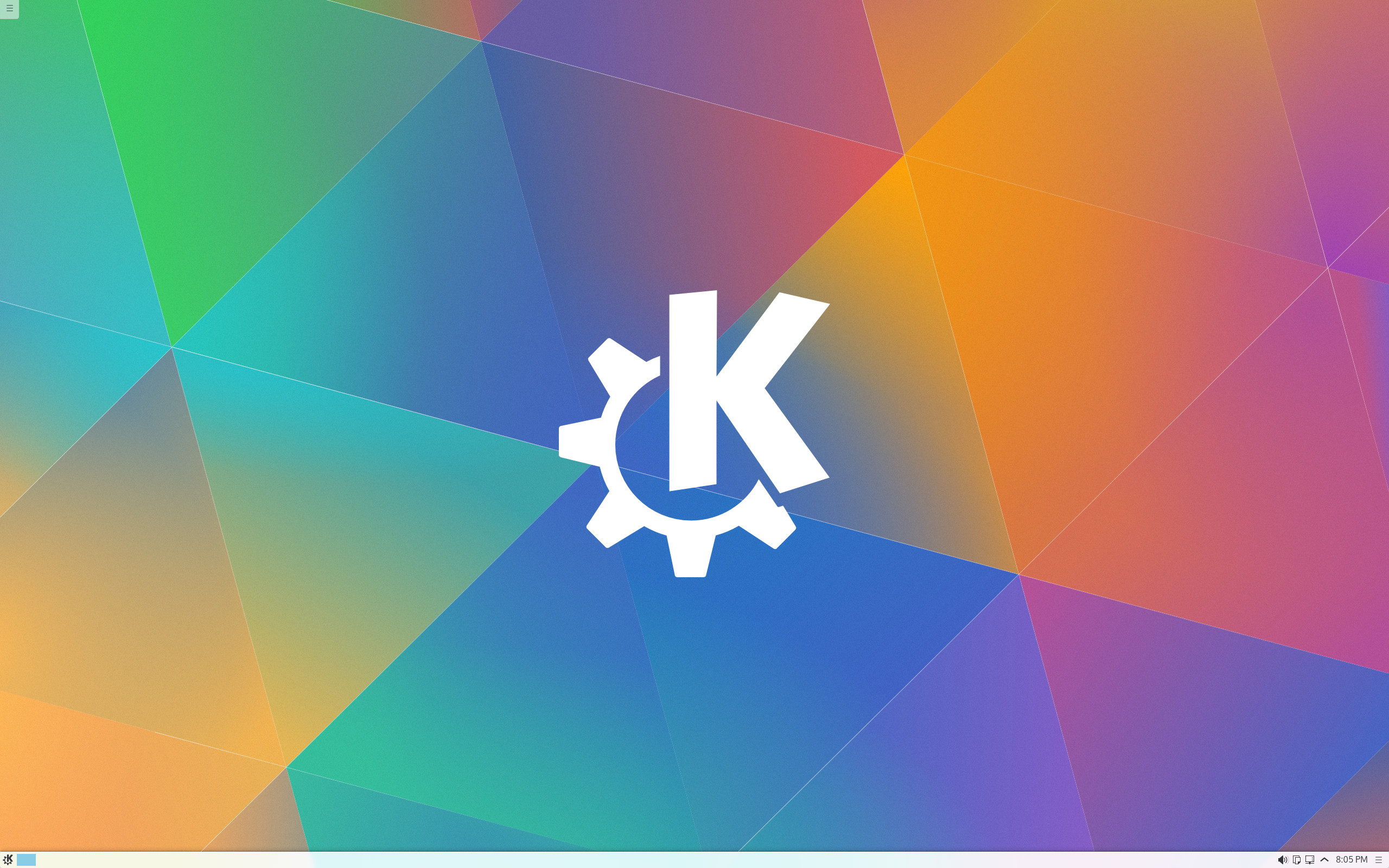
Andreas is doing a fantastic wallpaper contest which I hope many of you will participate in; the goal is to get wallpapers for weather-based wallpapers, and to also get several new wallpapers into circulation. It doesn’t have to be weather wallpapers – if you have a wonderful high-resolution graphic, submit it!

In addition to pulling in community work, we’re going to change up the release cycle for new wallpapers: Previously, wallpapers were updated every second version, but now we will add a new wallpaper for every release of Plasma!

lesscreepy

Avatars

The current crop of standard avatars have aged gracefully, but we’re looking to refresh them. We have a new crop of avatars based on history-changing individuals and fairy-tale children. Eventually we will expand the set to include a range of personalities.

Credit for the design goes to Jens Reutersberg who created the fantastic VDG profile pictures.

deco

Decorations

We may be looking forward to a new alternate decoration; originally based on Breeze and the result of a first-time hack gone too far, “Chroma” may be appearing! Somewhere! Where it shows up all depends on my laziness and incompetence. I assure you I am only mostly lazy and incompetent.

There’s a few things that need to be done with it, mostly in regards to properly breaking it out from Breeze to be it’s own decoration, and learning to properly submit it.

Akademy

Several VDG members are looking to show up at Akademy, so if you’re looking to hear an awesome talk or two there will be some design talks in the future. I won’t go spoilertastic, but I’m looking forward to it, or dying trying to get there – you should be to!

Plasma Sprint 2015

Just over 2 weeks ago I stepped off a plane, putting my heels onto Canadian soil after spending a week participating in the Plasma 2015 Sprint. The entire experience was exhausting in the best of ways, and after landing home my throughput was thoroughly trounced for some time as I settled back into normalcy. But lets rewind to the beginning;

The day of my arrival in Barcelona it would be a far cry to say I was nervous – in the moments before pressing the buzzer I was in a downright terror! These people will realise I’m an idiot! Ship me back to Canada on the next canoe! Needless to say only minutes in to the sprint not only were my worst fears completely unfounded – but I met a group as welcoming as they were brilliant.

Finally, I think I have the perspective to share my experience. I won’t try to recap the entire event, I will mainly focus on VDG work.

But first! The People of KDE

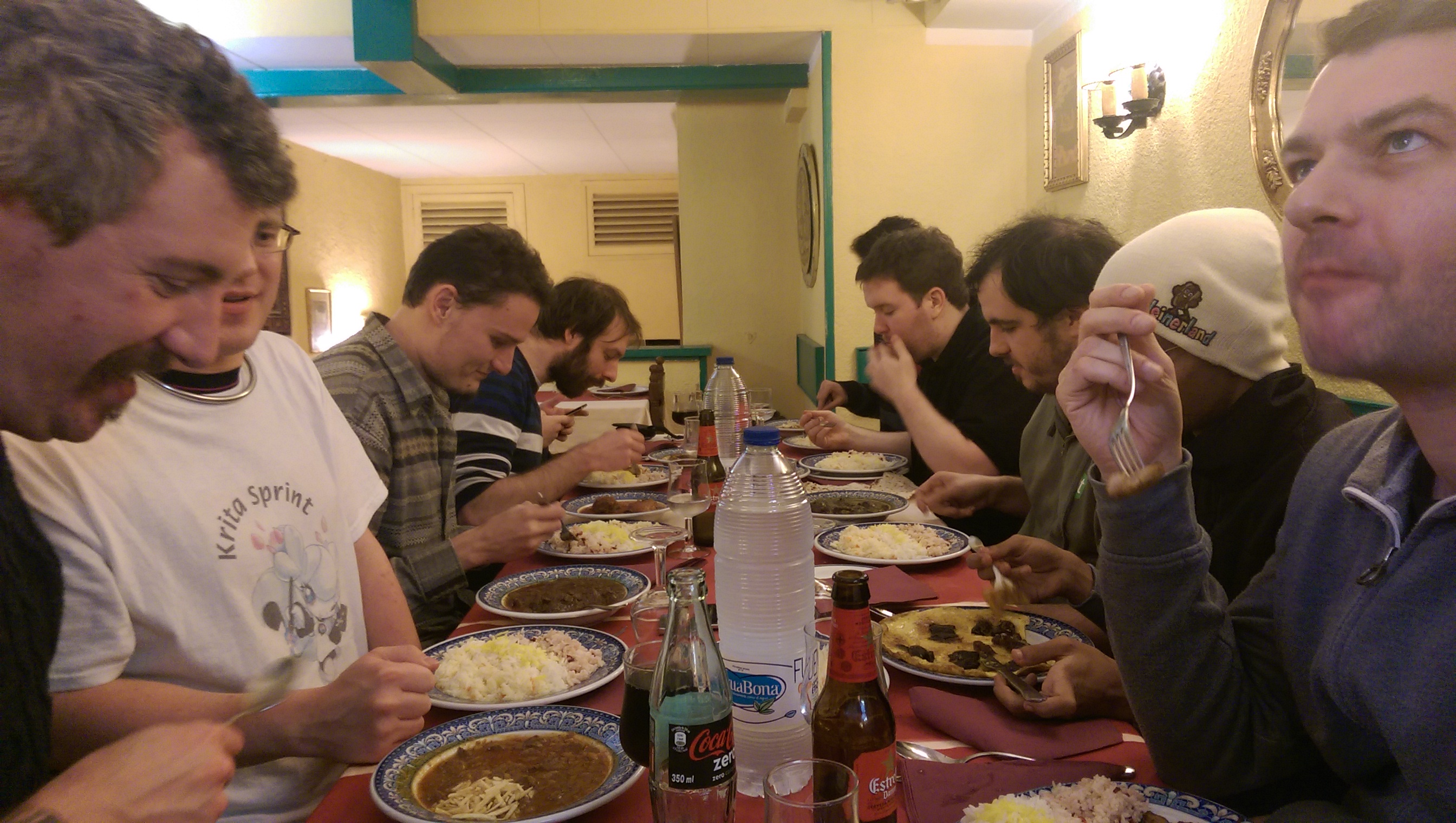
I met about a dozen dedicated and hard-working developers in the Blue Systems office during the sprint, and it needs to be said just how great these people are – each and every one passionate about their respective fields and projects. I’d really just like to give a shout-out to everyone I met in the Sprint. They’re the kind of people who make you smarter by proximity, and they welcome you to do it. For anyone invited to a Sprint I highly recommend jumping on the chance; you will be enriched for doing it.
IMAG0387_BURST001

Drawing Konquis

After arriving mid-day Jens Reuterberg headed the idea to begin creating and stockpiling promotional graphics. Essentially we wanted vector artwork which could be used easily for things like release announcements, large print materials, web pages, etc. Jens dove head-first into logotypes, and I splintered off into doing up a pair of vector Katie and Konqui graphics during my half-day; Konqui being a direct trace, and Katie being new. You can view the original graphics by the talented Tyson Tan here.

g4358

Download KatieDownload Konqui

VDG <3 Developers

There was a great deal discussed during a pair of review and planning sessions in the first two official Sprint days. One of the biggest things (for Jens and I) was helping the VDG and developers interoperate better; for those who don’t know, the VDG communicates very differently than mainline developers.

Devs tend to focus on bug reports, mailing lists, reviewboards, and IRC. Members of the VDG tend to use Forums, Hangouts, and to a limited extent IRC. Immediately there’s very little overlap, which means at this point developers have to go to the forums to wield the VDG.

The problem lies in how forums operate; where the VDG design processes benefits from the relative chaos, it’s not good for developers looking for the ‘final word’ of the design discussion. It’s further impacted by forum conversations which don’t have definitive conclusions, or discussions which can get muddled down. When developers go to the forums they need a solid final product to build around – but on multiple occasions they end with a half dozen different designs and no clear answer on what they should do.

It was a short discussion during the Sprint, but Jens and I both immediately agreed that this is an area where the VDG must step up and refine our process.

The current idea will be sticking with the forums threads as the main creative area, but changing the way they spin down. Once we feel a design discussion has gestated, the VDG aims to have a member pull the ‘final’ design from the conversation, at which point they’ll put together a coherent deliverable developers can understand and act on, on a channel they are comfortable with.

There are still details we are ferreting out before we more formally put this into motion, but the essential aim is to move the VDG into a position where we can reliably ship usable deliverable design, on a channel developers can comfortably handle.

Breeze Applications

This only came up briefly during the Sprint as well, but is something which has been brewing for a while now – so it might be worth mentioning ‘for realsies’, essentially since I don’t think anyone pointed out that this is a ‘thing’;

KDE and Plasma have a bit of a history with names, and for many core applications we’ve been wanting a more consistent scheme for it all. At the same time, with every major tookit release (i.e. Qt4 -> Qt5) many applications need to be ported or re-written. Finally, on these major releases, visual/workflow trends have usually shifted meaning the experience of applications will also shift.

So, all this stuff going on, we figure it’s time to put a bow on it and turn this cavalcade of factors into one cohesive event, so we’ve come up with the concept of Breeze Applications.

The idea is that, coinciding with frameworks, trend, and design changes we will name a subset of the bundled applications after the current design. So for Plasma 5 we will have ‘Breeze’, for some future plasma version many moons from now we may have ‘Gust’ or ‘Wind’ applications.

What does this mean? The biggest thing is that we intend to use these ‘Breeze’ applications as standards bearers, which we hope to see other applications follow. It’s much the same way Google treats ‘Holo’ and ‘Material’, along with their base applications: This is the design, these are the examples. Ideally we intend to focus on only a few applications, which developers will be able to dissect and say ‘oh, this is the plan’. In addition, as new technologies and techniques land, we hope Breeze applications will be the frontrunners in adopting cutting-edge KDE/Plasma technologies.

Does this mean every Plasma or KF5 app will be named “Breeze X”? No. We only plan on Breeze-ifying the more simple core applications which can be easily maintained, kept up to date, and streamlined enough that the code could easily be used for reference material.
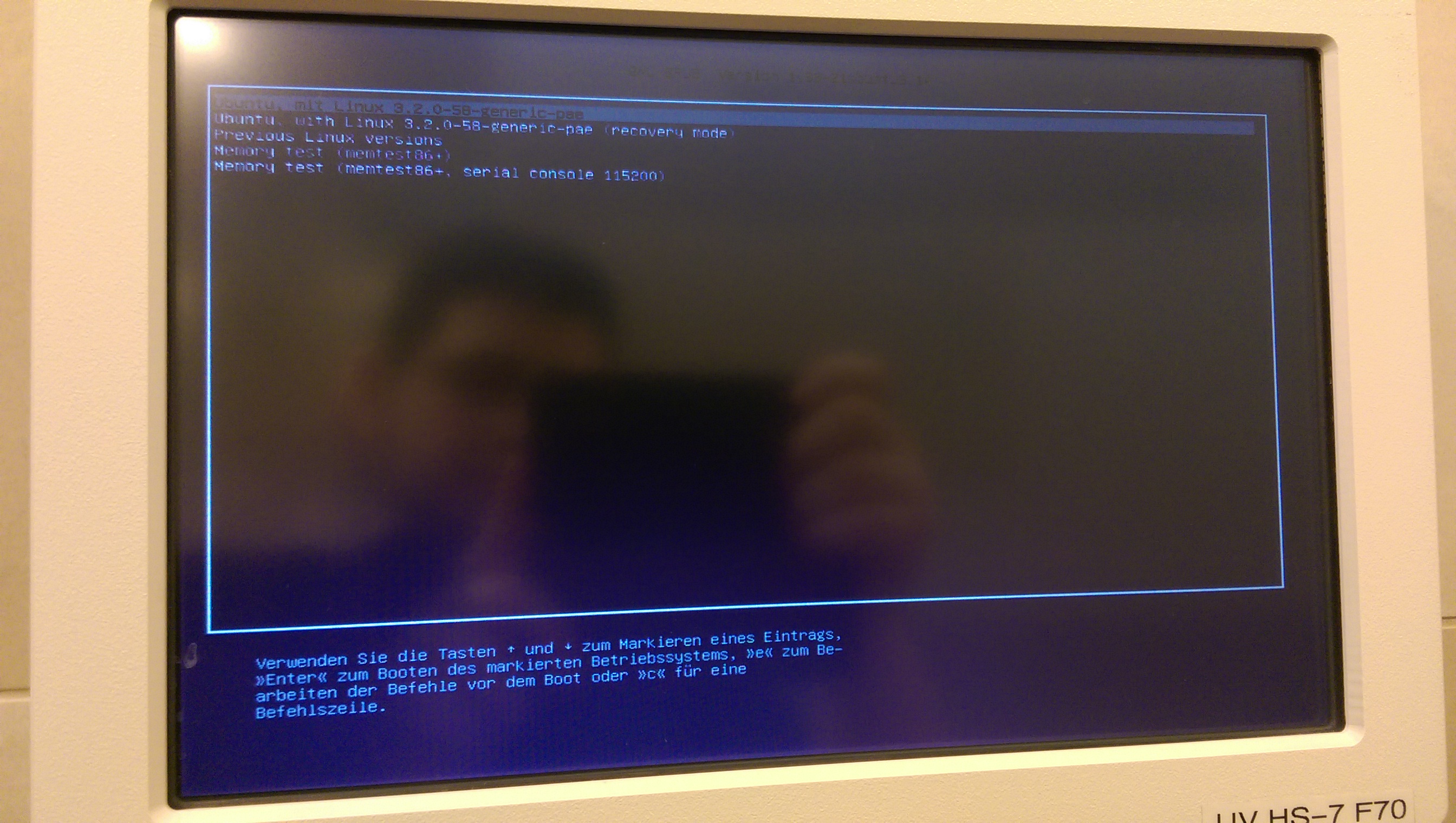
Fun fact: The bathrooms in Frankford are powered by Ubuntu!

Fun fact: The bathrooms in Frankford are powered by Ubuntu!

Dynamic Window Decorations

Before I even get started on this, I must give props to David Edmonston. The man is a trooper, and I feel almost as if I tortured the poor gentleman throughout the sprint.

During the sprint I presented some of my DWD plans; technical details were discussed, implementation questions were raised, and concerns were were round-tabled. The discussion was extremely positive and productive, and real issues were ferreted out.
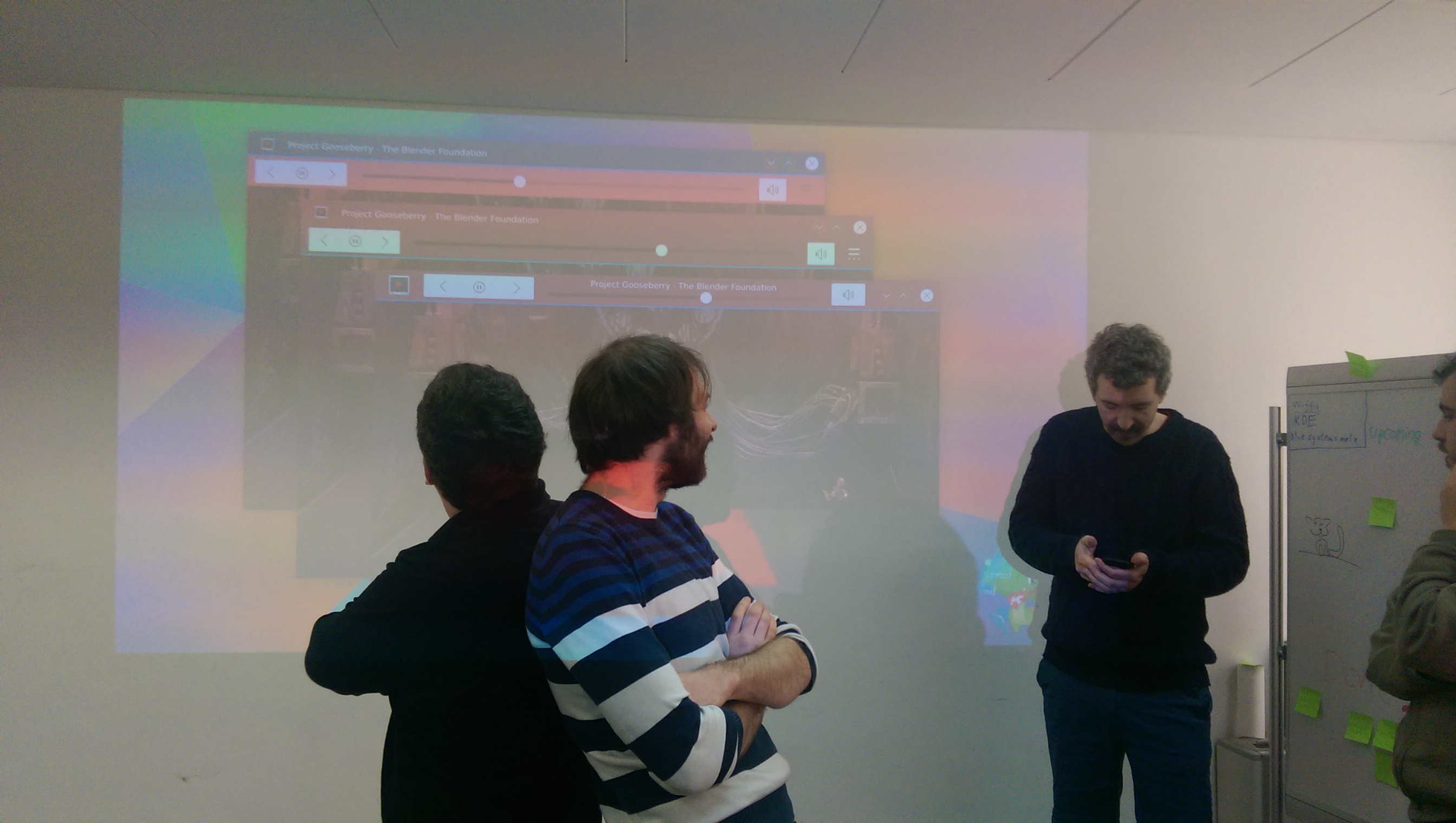
IMAG0392_BURST007

One of the larger questions was ‘what IPC protocol should be used?’; I personally was educated about the Wayland protocol, and that it could be used even on ‘non-wayland’ systems – since it is just a protocol and not an installed library. Ultimately, the developers present agreed that D-Bus was the way to go, the general consensus being that the protocol is known and familiar, mature, battle-tested, and isn’t going to shift or break.

I also gave my personal thoughts on how applications might access/implement DWDs, and while there’s still considerable room for discussion, it seems to be on the right track. I was cautioned by developers and I feel the need to point out: even when the DWD protocol does pick up steam it will still be years before it’s available in any meaningful way.

During the development portion of the Sprint I managed to rope David into doing some DWD work on a proof-of-concept level. Through his efforts we now have a much better idea of what obstacles we will face integrating widgets into server-side decorations, such as ensuring the draw code runs correctly/efficiently. He heroically managed to get window decorations to draw usable sliders, so we do know window decorations are capable of drawing server-side widgets.

Sadly, the proof did nearly cost David his sanity. It probably didn’t help that I was giggling like an imbecile. Sorry about that, David. I hope the tea made up for it. :/

UI Feedback

Throughout the Sprint Jens and I were able to lend our services in helping to design and streamline interfaces. Towards he end of the Sprint we also did a walkthrough of the Plasma desktop and several components to identify surface-level bugs and weak areas.

This included an extensive review of the system settings utility and its KCMS.

I also managed to chip in some light advice with a new power-manager tool, and an upcoming redesign of the Baloo settings manager with Vishesh Handa.

And a Great Deal more!

As I mentioned at the start of the post, and can only mention again; There were a lot of really great people at the Sprint – and all of them had their own projects, goals, plans, and feedback. It was really impressive to meet people who had such a deep understanding of KDE Frameworks and Plasma, able to talk about extremely complex technologies in detail over a coffee.

I, personally, learned a great deal from everyone. From being unable to compile a package to now comfortably hacking, simply rubbing shoulders with the outstanding individuals was absolutely my privilege.

There’s a great deal not in this post, but I imagine other posts will fill in the rest… So on a closing note I will say again; if you are ever invited to a Sprint, don’t hesitate to say yes – it’s an amazing experience which is beyond worth it!
I drank this. I still don't know what it was.

I drank this. I still don’t know what it was.
How Bread is Helping Make Breeze Cursors Pixel Perfect

Some people accuse me of being a crazy person. Others are wrong. But occasionally the seeming madness of it all will bring about good things.

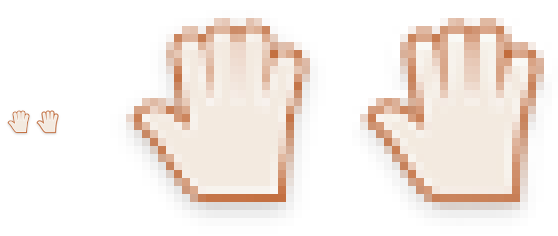
Last night was a sleepless night in all the good ways; I’m excited for the upcoming Plasma Sprint, and knowing I’ll be packing myself into a cigar tube and flinging myself across the North Atlantic Ocean is too much for me to sleep over. I had promised a commenter (too long ago) I would make green cursors, so I decided to make good on my word. After it took 5 minutes I needed more; and the wafting smell of my bread maker inspired me to make a Bread cursor theme. Once that was done, sufficiently delirious, I sent my weird bready message to the VDG. They appear to have ignored it – a wise decision. They’re busy people doing actual work.

bread

Today I opened up the cursors to see what I had done.  Nothing too terrible, and I decided it was worth polishing them up if just for the larfs. One of the touches was to add a half-pixel white outline between the crust and loaf for contrast.

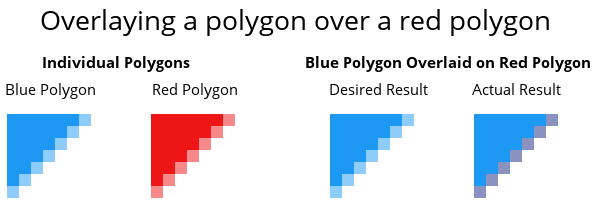
When I rendered the tweaked cursors, they started to look awful because of how SVG images layer and clamp nearby vectors. Simply put on a vector edge, even if there’s another identical edge above it, both edges will affect their neighbouring pixels as opposed to the upper vector shape ‘blocking’ the lower shape.

sample1

The “desired result” is the result a designer would expect, while the actual result is technically correct.

This had the effect of making the hand of my newly minted bread cursor (with the most edges) look “washed out” because the two lighter inner layers were covering the outline.

sample2

The solution for this problem is to ‘supersample’ the cursors in our build scripts. Supersampling is when you render the image at a much higher resolution, and scale it down to the desired resolution. Instead of going directly from Inkscape to a final image, we first export each cursor to a temporary file which is 4x standard resolution and 2x double resolution. We then scale down and copy that image to the final resolutions.

The end result is going to be the option for us to more easily use sub-pixel detailing in cursors without worrying about losing smoothness; any extra detail may not be noticeable on a day-to-day level – but it’s the polish Plasma users are beginning to expect. Additionally, high-resolution cursors will also benefit because the half-pixel details will become full pixel details, and on a high-quality screens you’ll have ultra-sharp graphics.

breadAnd that’s how bread is helping make Breeze cursors pixel perfect!

Now, super-pixel-perfection isn’t that noticeable so there’s not going to be a rush to update existing cursors; but if one day you quietly notice your cursor is a little bit sharper than it used to be – you can thank bread.

Download The Cursors:
(extract “compiled” cursors to your icons folder to install, or download the source to edit or remix them. Golgari is a green/black theme)

Bread Source
Bread Compiled
Breeze Golgari Source
Breeze Golgari Compiled

Plasma 5.2 – The Quintessential Breakdown

header

KDE is one of the oldest open-source desktop projects which can be found today, and over the years it has established a rich history of highs and lows. During some points it has been the undisputed ruler of the desktop world, while other times it had fallen behind or faced hard trials.

A memory everything but forgotten, just over 6 years ago KDE tore itself apart in spectacular fashion to assemble itself anew. Brave users who wandered through the rubble and wreckage saw developers rebuild the KDE before their eyes, witnessing the birth of ‘Plasma Desktop’ and it’s sister project ‘KDE Development Platform’. It was universally understood that this twisted gnarled creature of a computing experience was both hideous yet full of potential, and over 5 years of refining Plasma it had struggled, crawled, hobbled, walked, run, and eventually mature into a fine desktop.

Despite becoming an accepted way of computing there has always been one nagging persistent issue with it all; KDE is old and the legacy it inherited was a knotted mess of a foundation, with over a decade of old code accumulating to encumber nearly every aspect of the system. Software could not be written to use KDE Development Platform without pulling in so much baggage, and like a bundle of cords or strings there was no chance of pulling one from the mess without receiving the entire ball of twisted tangles; even a simple media player could bring in nearly all the legacy materials, even when used outside the Plasma desktop.

KDE developers knew what had to be done and set into motion years ago a complicated, time-consuming, and challenging goal: “we must untie the knots”. With a looming Qt5 transition on the horizon (the underlying toolkit used by KDE) developers saw their opportunity to untangle the ball as they ported to the next Qt.

But there were fears, warranted fears, that this process would again lay waste and pervert the now solid Plasma Desktop, people fearing they would be forced to decide between their beloved systems with an expiry date, or a new era of painful unfinished instability. The developers had a different plan in mind; a silent revolution planned to pass silently with little fanfare, as the underpinning foundations are churned into a sleek and modular framework which could be as loved as the desktop which used it.

“We must untie the knots.”

That day has already come and passed; dubbed “KDE Frameworks 5” for the technology, and “Plasma 5” for the environment/applications, these technologies have been in circulation as technical demonstrations and alternatives for some months now. A combination of nervous anticipation and memories of being burned by the 4.0 releases lead all but the bravest to venture early and discover nothing nearly as painful as the transition between KDE 3 and Plasma. With KDE Plasma 5.2 being formally announced as the default environment of Kubuntu 15.04 due only months away, Frameworks 5 and Plasma have been recognised as maturing usable products – which means it’s time to take a serious look at what to expect when you turn it on for the first time.

For the sake of simplicity I will be referring to KDE Plasma Desktop as “Plasma 5.2”, KDE Frameworks 5.6 as “Frameworks 5”; most regular people don’t need to know the exact version of the frameworks, and this review will be focused on the experience of the Plasma 5.2 desktop as it feels today. Some parts of the Plasma 5.2 experience are holdovers from Plasma 4, but I will cover them all the same should new users wonder if the hand-me-downs of the previous generation desktop gel with the new experience. I won’t be covering most technical issues in this breakdown; there are several that I had, however I’m using Beta software on an Alpha operating system – technical issues are to be expected which won’t impact final releases.